
How Self Determination Theory Explains Human Motivation
Motivation is what drives our actions and decisions. Understanding it helps people achieve goals, stay productive, and improve overall wellbeing in daily life. It influences everything from learning new skills to maintaining healthy habits.
Psychologists have developed various theories to explain motivation. Maslow’s Hierarchy of Needs focuses on fulfilling basic to advanced needs, while Herzberg’s Two-Factor Theory examines satisfaction and dissatisfaction. Behaviorist approaches emphasize rewards and punishments. While each theory offers insight, they do not fully explain long-term and self-driven motivation.
Self Determination Theory offers a modern perspective by focusing on how internal and external factors influence motivation. It helps explain why some people stay engaged and motivated over time, while others struggle to maintain consistency.
What Is Self Determination Theory?
Self Determination Theory (SDT) is a psychological framework that explains human motivation based on internal psychological needs. It focuses on how people develop motivation that is sustained rather than driven only by external rewards.
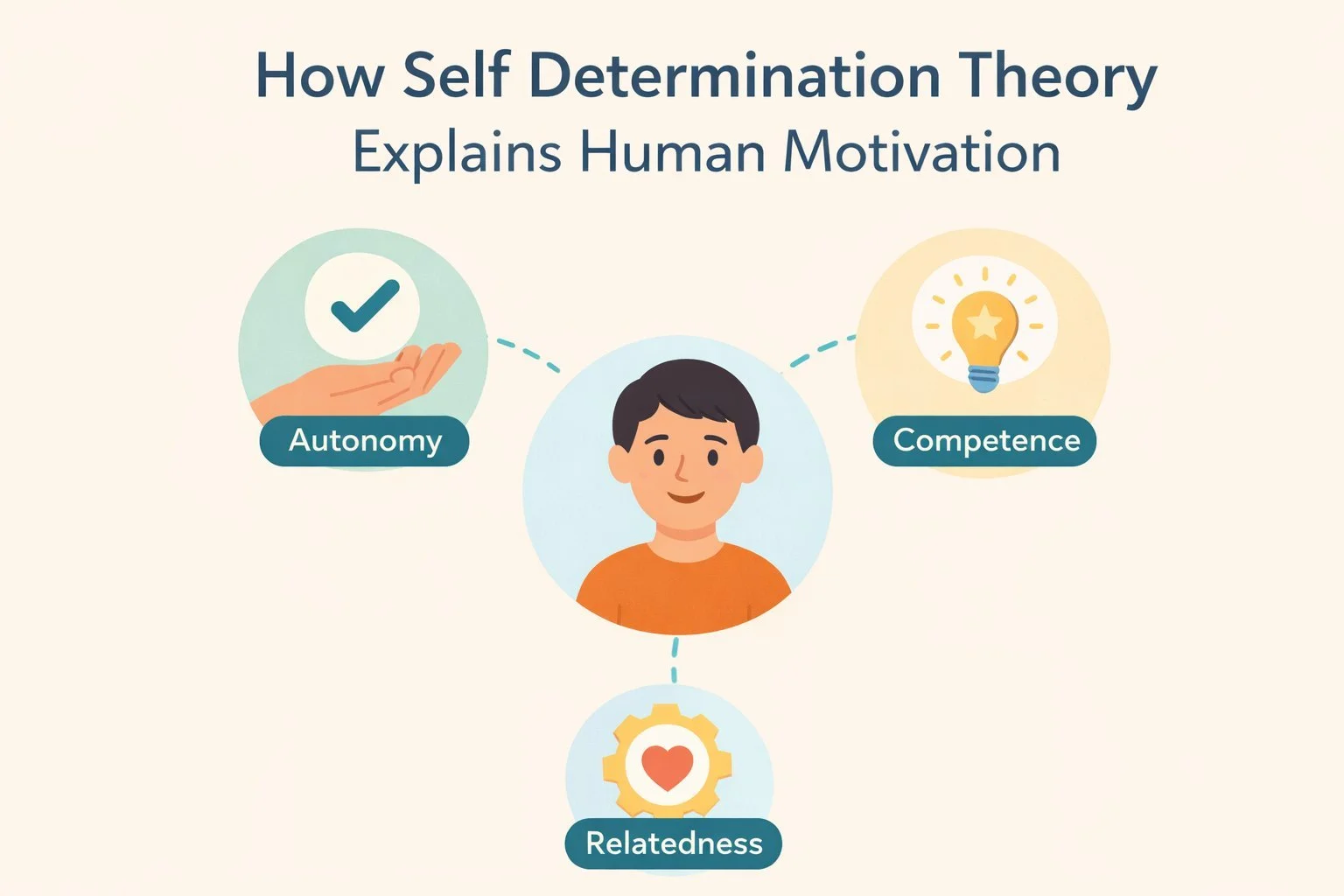
Developed by Edward Deci and Richard Ryan, SDT identifies three essential needs: autonomy, competence, and relatedness. When these needs are supported, individuals are more likely to stay motivated, engaged, and satisfied.
Unlike reward-based motivation models, SDT emphasizes long-term motivation. It shows that lasting motivation comes from personal choice, skill development, and meaningful social connections rather than incentives alone.
Intrinsic vs Extrinsic Motivation
Intrinsic motivation refers to engaging in an activity because it is personally meaningful or enjoyable. It is driven by internal factors such as curiosity, interest, or the desire for personal growth. When people are intrinsically motivated, they act out of genuine satisfaction rather than external pressure.
Extrinsic motivation, in contrast, is influenced by external factors such as rewards, recognition, deadlines, or the avoidance of negative consequences. In this case, behavior is guided by outcomes rather than personal interest in the activity itself.
Self Determination Theory connects both types of motivation by explaining how external influences can either support or undermine motivation. When extrinsic factors align with psychological needs like autonomy, competence, and relatedness, they can reinforce intrinsic motivation rather than replace it. This balance helps sustain motivation over time.
The Three Psychological Needs in Self Determination Theory
Self Determination Theory is built around three core psychological needs that influence human motivation and behavior. When these needs are supported, individuals experience higher motivation, engagement, and overall wellbeing.
Autonomy
Autonomy refers to the sense of having control over one’s actions and decisions. It does not mean working alone, but rather feeling that choices are self-directed. When people are given the freedom to make decisions and express their preferences, they experience higher motivation, greater responsibility, and stronger commitment to their actions.
Competence
Competence is the feeling of being capable and effective in one’s activities. It develops through learning, practice, and achieving meaningful goals. When individuals see progress and experience success, their confidence grows, which encourages continued effort and motivation.
Relatedness
Relatedness is the need to feel connected, supported, and valued by others. Positive relationships with peers, family, colleagues, or mentors create a sense of belonging. When people feel socially connected, they are more engaged, motivated, and willing to persist in their goals.
The Role of Psychological Needs in Human Motivation
Autonomy, competence, and relatedness collectively influence how motivated individuals feel in different areas of life.
When these psychological needs are supported, people develop a sense of control, capability, and connection.
Fulfilled needs lead to higher engagement, satisfaction, and sustained motivation over time.
Individuals are more likely to pursue goals with enthusiasm and remain committed to personal and professional growth.
Supporting these needs contributes to emotional balance, confidence, and overall wellbeing.
When psychological needs are not met, motivation tends to decrease.
People may experience frustration, disengagement, or feelings of isolation and self-doubt.
Unmet needs can negatively impact performance, learning outcomes, and daily functioning.
Real Life Examples of Self Determination Theory
Motivation in Education and Learning
Students stay motivated when they have choices in how they learn, feel capable in their skills, and experience support from teachers and peers. This leads to better engagement and academic performance.
Motivation in the Workplace
Employees are more motivated when they have meaningful tasks, opportunities to develop their skills, and supportive relationships with colleagues and managers. This results in higher productivity and job satisfaction.
Motivation in Personal Goals and Habits
Individuals are more likely to stick to personal goals, such as fitness routines or learning new skills, when they feel in control, confident in their abilities, and connected to supportive friends or communities.
Benefits of Understanding Motivation Through Self Determination Theory
1. Improved Self-Motivation: By understanding how autonomy, competence, and relatedness influence behavior, individuals can tap into internal motivation and stay focused on their goals.
2. Better Mental Wellbeing: Meeting these psychological needs reduces stress and frustration, promoting a sense of satisfaction and overall wellbeing.
3. Stronger Engagement and Long-Term Commitment: When motivation is supported by SDT principles, people are more likely to stay committed to work, learning, and personal projects, maintaining engagement over time.
4. Enhanced Learning and Skill Development: Understanding what motivates people can improve learning outcomes and encourage continuous growth by focusing on intrinsic goals.
5. Higher Productivity and Performance: Applying SDT in the workplace or daily tasks increases focus, efficiency, and the quality of output.
6. Greater Satisfaction in Relationships: Fostering relatedness strengthens social connections, teamwork, and collaboration, contributing to more fulfilling personal and professional relationships.
7. Sustainable Goal Achievement: Motivation rooted in internal drives rather than external rewards helps individuals maintain progress and achieve long-term goals more effectively.
Common Misunderstandings About Self Determination Theory
1. It Is Only About Intrinsic Motivation
A common misconception is that SDT focuses only on intrinsic motivation. While intrinsic motivation is central, SDT also recognizes the role of external factors, especially when they support autonomy, competence, or relatedness.
2. External Rewards Always Reduce Motivation
Many believe that rewards always undermine motivation. SDT shows that rewards do not necessarily reduce motivation if they are meaningful, provide positive feedback, or support personal growth.
3. SDT Is Only for Education or Work
Some assume SDT applies only in schools or workplaces. In reality, it can be used in everyday life, personal goal setting, fitness, hobbies, and relationships.
4. Motivation Can Be Forced
Another myth is that people can be forced to stay motivated. SDT emphasizes that motivation is most effective when psychological needs are met voluntarily rather than imposed externally.
5. It Ignores Social or Environmental Factors
SDT is sometimes thought to focus only on internal drives, but it also considers how social support, community, and the environment influence motivation.
Practical Ways to Apply Self Determination Theory
1. Increase Autonomy in Daily Life
Give yourself choices in how you complete tasks or structure your day. Making decisions for yourself fosters a sense of control and strengthens motivation.
2. Build Competence Through Small Wins
Focus on achievable goals and gradually build your skills. Each small success increases confidence and encourages continued growth.
3. Strengthen Relatedness Through Relationships
Connect with supportive friends, family, or colleagues. Positive social interactions enhance motivation and create a sense of belonging.
4. Set Meaningful Goals
Align your goals with your personal values and interests. Motivation is stronger when actions feel purposeful.
5. Seek Feedback and Support
Constructive feedback helps improve skills and reinforces competence. Support from others also strengthens relatedness and engagement.
6. Balance Challenge and Skill
Take on tasks that are challenging but manageable. This keeps you engaged and prevents boredom or frustration.
Conclusion
Self Determination Theory explains human motivation by highlighting the importance of autonomy, competence, and relatedness. When these psychological needs are met, individuals are more motivated, engaged, and satisfied in their actions. We use Self Determination Theory as a foundation for the services we provide, helping individuals build independence, achieve personal goals, and strengthen social connections.
As a trusted vendor for Self Determination Program participants, ElevateAbility offers personalized, one on one life skills tutoring designed to support daily living, choice making, and long term growth. By focusing on choice, development, and supportive relationships, we promote sustained engagement, improved wellbeing, and a more fulfilling and purposeful life for the individuals and families we serve.