How Does Payment Work in the Self Determination Program?
The Self Determination Program (SDP) is a person centered service model that gives individuals with developmental disabilities more control over their services, supports, and funding. Instead of relying on pre selected services, participants receive an individualized budget that they can use to purchase services that match their goals and daily needs.
Understanding how the Self Determination Program payment and budgeting work is important for families and participants because it helps them make informed decisions, manage funds effectively, and maximize available resources. Knowing how payments are structured can also reduce confusion and ensure services remain within approved budgets.
SDP payments differ from traditional regional center funding because participants have greater flexibility and choice. In traditional models, services are often assigned and paid directly by the regional center, while in the Self Determination Program, participants control their budget and choose providers, with payments managed through approved financial management services.
How Does Payment Work in the SDP?
Payment in the Self Determination Program (SDP) refers to the individualized funding model that allows participants to manage their own services and supports. Instead of receiving fixed services from assigned providers, participants receive a personalized budget that can be used to purchase approved services based on their needs and goals. This individualized budget might be developed using past service costs, current needs, and the objectives outlined in the Individual Program Plan (IPP), giving families and participants greater flexibility and control over how services are delivered.
Funds are not paid directly to participants. The regional center approves the budget, and a Financial Management Service (FMS) manages all payments, including billing and payroll for service providers. This system ensures that funds are used correctly, tracked properly, and remain compliant with program rules while still allowing participants to choose services that best support their daily living, independence, and long term growth.
Participants looking to use their approved SDP budget for practical, goal focused support can explore ElevateAbility’s one on one life skills tutoring programs.
Purpose of SDP Payment
Supporting Personalized Services and Independence
The main purpose of Self Determination Program (SDP) payment is to provide personalized services that match the unique needs and goals of each participant. Instead of a one size fits all approach, participants receive an individualized budget that can be used for therapies, life skills training, employment supports, and daily living assistance. This flexibility helps individuals build practical skills, increase independence, and improve their overall quality of life.
Encouraging Participant Choice and Control
SDP payment is designed to give participants and families greater choice and control over services and supports. Participants can select their own service providers, decide how their budget is allocated, and customize their support plans based on personal priorities. This model promotes self advocacy, empowers families in decision making, and reflects principles rooted in Self Determination Theory, which emphasizes autonomy, competence, and meaningful choice in personal development.
Promoting Person Centered Planning
Another important purpose of SDP payment is to support person centered planning. Budgets and services are developed around the participant’s strengths, preferences, and aspirations, ensuring that supports are meaningful and goal driven rather than service driven.
Increasing Transparency and Financial Flexibility
SDP payment also improves transparency in funding. Families can see how funds are allocated and track spending, which helps them manage resources more effectively. The flexible funding structure allows adjustments as needs change, ensuring continued support throughout different life stages.
How Self Determination Program Payment Works
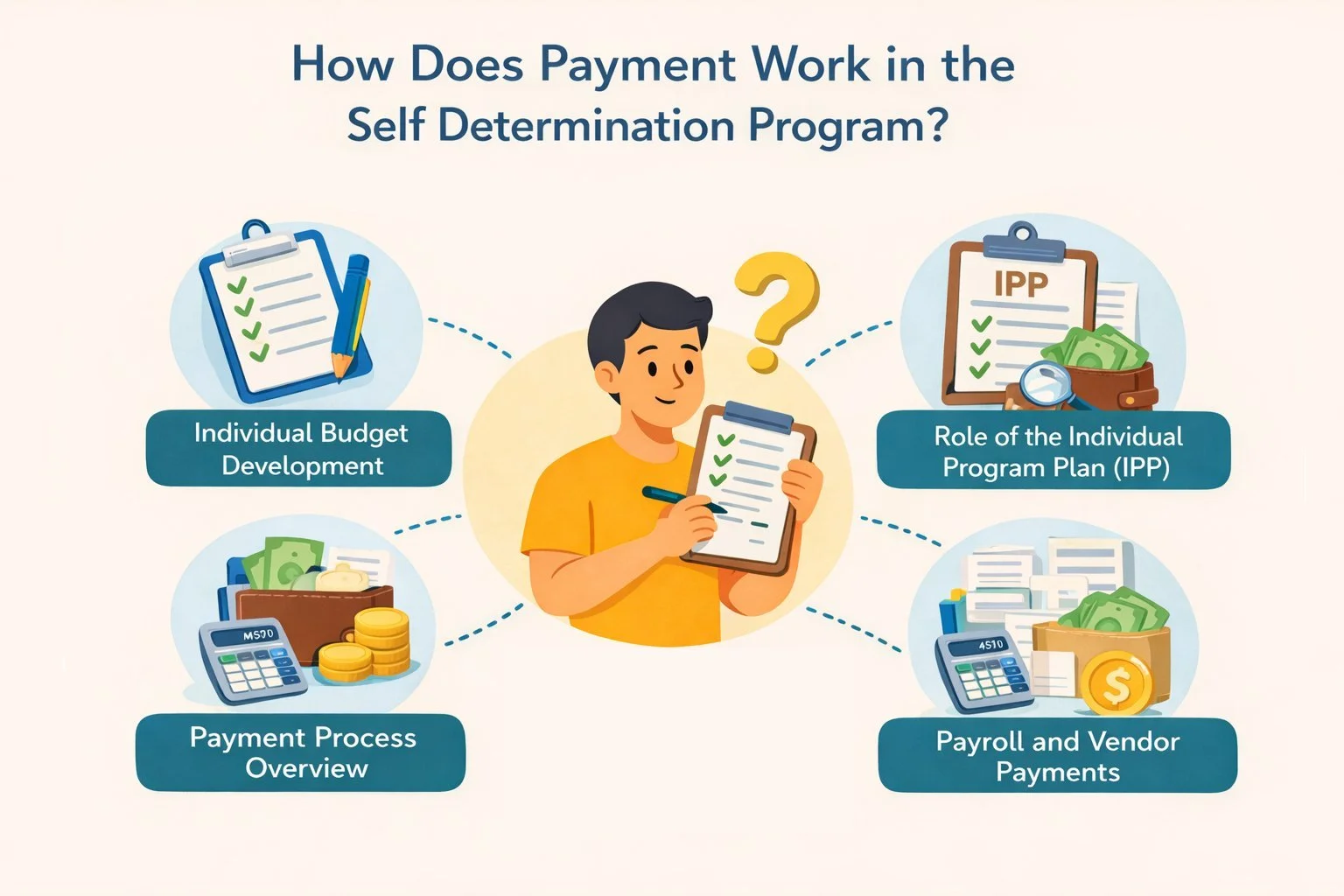
Individual Budget Development
In the Self Determination Program, each participant receives an individualized budget that is calculated based on their specific needs, goals, and past service usage. The regional center reviews the participant’s support requirements, current services, and level of need to determine an appropriate budget amount. This budget is designed to cover approved services that help the participant achieve independence, improve daily living skills, and participate in the community.
Role of the Individual Program Plan (IPP)
The Individual Program Plan (IPP) plays a central role in budget development. The IPP outlines the participant’s goals, strengths, and support needs, and serves as the foundation for determining how funds will be used. Services and supports listed in the IPP must align with the individualized budget to ensure funding is used appropriately and effectively.
Payment Process Overview
Self Determination Program payments are managed through Financial Management Services (FMS) rather than being paid directly to participants. Once services are approved, the FMS handles all billing and payments to service providers, ensuring compliance with program rules and financial guidelines. This process helps families focus on service planning while maintaining financial accountability.
Payroll and Vendor Payments
The FMS is responsible for processing payroll for hired staff and issuing payments to approved vendors and service providers. This includes paying therapists, tutors, independent facilitators, and other service providers. By managing payroll and vendor payments, the FMS reduces administrative burden for families and ensures accurate tracking of expenses and budget usage.
Conclusion
Understanding how the Self Determination Program payment structure works helps families make informed decisions about services and funding. Each participant receives an individualized budget based on their unique needs, goals, and Individual Program Plan. Approved supports are funded through this budget, while Financial Management Services manage billing and provider payments to ensure transparency and compliance. This model provides greater flexibility and participant choice compared to traditional regional center services.
Families seeking personalized and goal focused support can benefit from partnering with a trusted vendor for SDP participants who understands the program’s requirements and service alignment standards. ElevateAbility provides one on one life skills tutoring for individuals enrolled in the program, with services carefully tailored to each participant’s approved goals and service plan. Our individualized approach emphasizes practical skill development, increased independence, and measurable progress within the participant’s authorized budget. Reach out to learn how our tutoring programs can effectively support your SDP services.
Frequently Asked Questions
How often are payments made under the Self Determination Program?
Under the Self Determination Program, payments are not given directly to participants. Instead, approved services are paid through the assigned Financial Management Service (FMS). Payments are typically processed after services are delivered and invoices or timesheets are submitted.
Payroll for employees hired by the participant may follow a set schedule, such as biweekly or monthly, while vendor payments are issued once documentation is reviewed and approved. The FMS ensures all payments follow SDP guidelines and stay within the approved individual budget.
What expenses are allowed or not allowed in the Self Determination Program?
Expenses must directly support the goals identified in the participant’s Individual Program Plan (IPP) and be approved within the SDP budget. Allowed expenses may include life skills training, therapy, employment supports, independent facilitators, and other disability related services. Costs unrelated to the participant’s disability needs, general household expenses, or items outside program rules are typically not allowed. All spending must comply with SDP regulations and regional center approval.
What happens if Self Determination Program funds are unused or exceeded?
SDP participants are responsible for monitoring their individual budget throughout the year. If funds are unused, they may be reviewed during annual planning or budget discussions with the regional center. If spending exceeds the approved budget, the regional center may require a review and possible adjustment to the plan. Working closely with the FMS and support team helps prevent overages and ensures proper budget management under the Self Determination Program.